Baldonnel, 1971
Damien O’Reilly learnt to fly with the Dublin Gliding Club when it operated from the Irish Army Air Corps base at Baldonnel. He was one of a generation of Dublin teenagers lifted into the sport by a dedicated, selfless team who provided the aircraft and the instruction — and something more. Gliding people share a bond that is unique in aviation. For many, it quietly shapes their values, their beliefs, even their careers.
Flying in Ireland and later in Australia, Damien sometimes gave air experience flights to people who couldn’t fully work the controls. Everyone did their best — but the technology of the day meant these passengers could never become what they wanted to be: pilots. The controls demanded feet. Getting into the cockpit demanded a team of lifters. The sport, as built, had a body in mind.
The sport didn’t need different people.
It needed a different aircraft.
So a young man made himself a promise: when time, technology and money ever lined up, he would build a dedicated soaring centre for the people gliding had left behind.
The long middle
Life happened, as it does — a career built, a son raised. The promise waited. In May 2009 it stopped waiting: Quiet Flight Pty Ltd was formed to acquire the aircraft, equipment and facilities. A month later came its sister company, with a name that says the whole plan in one word: SoarAbility.
The inspiration came partly from Glideability, the accessible gliding operation at the Ulster Gliding Club on Loch Foyle. But a 2009 visit made something clear: Glideability ran on government funding and a deep bench of volunteers. A privately funded venture on the other side of the world would have neither. SoarAbility would have to solve with engineering what others solved with manpower.
The design brief, 2009
- Technology instead of a standing ground crew.
- A self-launching two-seater, steerable on the ground — no wing runner, no tow plane.
- Cockpit entry that passengers can largely manage themselves — with comfort and dignity.
- A home airfield that allows purpose-built facilities and minimal waiting in the summer heat.
Finding Cunderdin
The search began at Northam, an hour from Perth — friendly Shire, welcoming aero club, but a narrow strip with crosswinds and runway lights spaced 16 metres apart. The ASK21Mi’s wingspan is 17 metres, and it taxis one wing down. The arithmetic was not encouraging.
Then the late Rod Carter — President of the Cunderdin Shire Council and, coincidentally, of the Gliding Club of Western Australia — made a suggestion. Cunderdin had two former military runways of exceptional length and width, freshly resurfaced. It had an active, long-established gliding club with an instructor panel that could take SoarAbility pilots as far as they wanted to go. It had flat emergency landing options in every direction, a progressive Shire willing to allocate land for a purpose-built facility, and a community of experienced pilots to fly alongside.
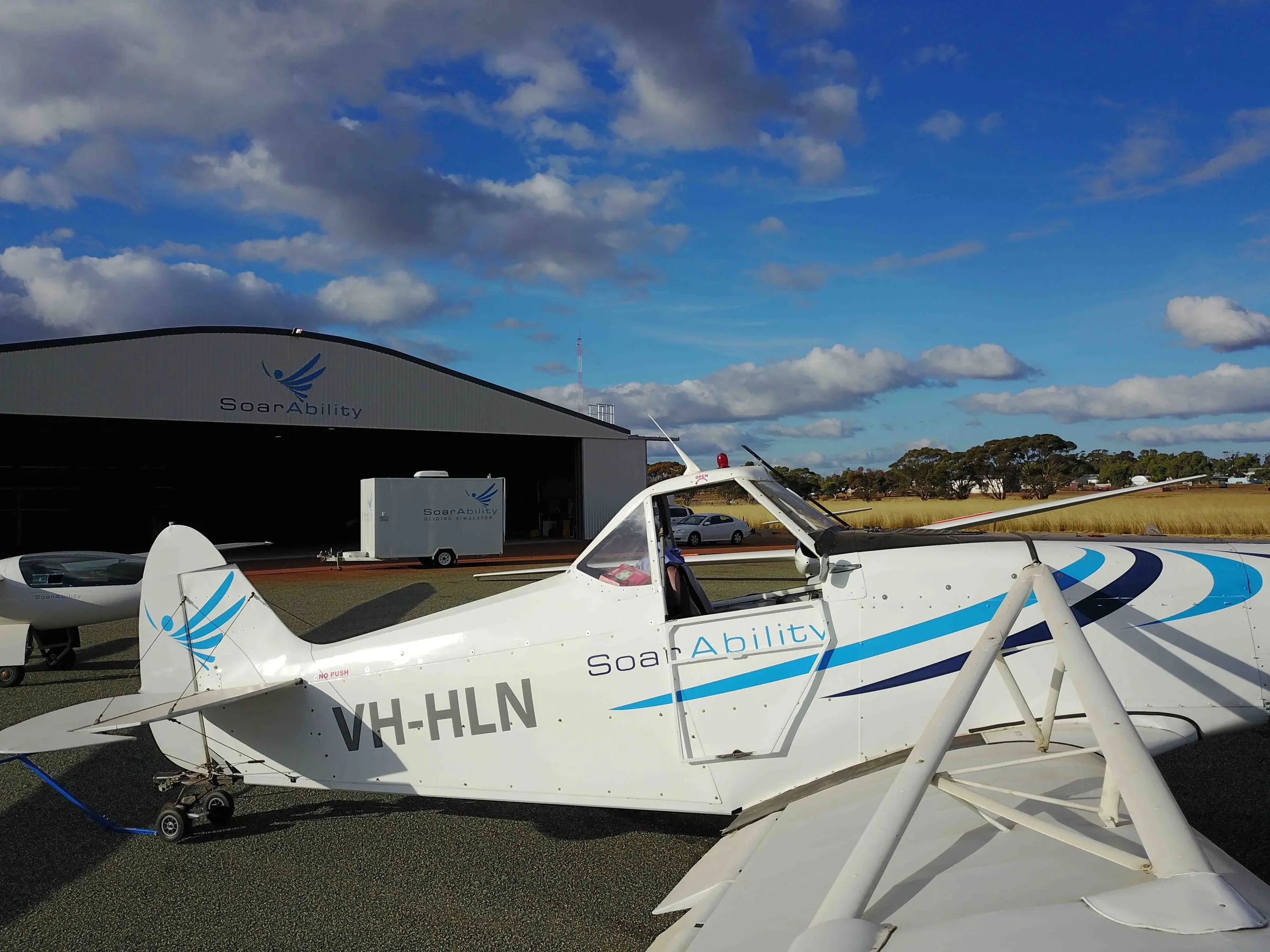
SoarAbility has been at Cunderdin ever since — a hangar, an accessible amenities compound, two remarkable aircraft, a travelling simulator, and a promise kept.